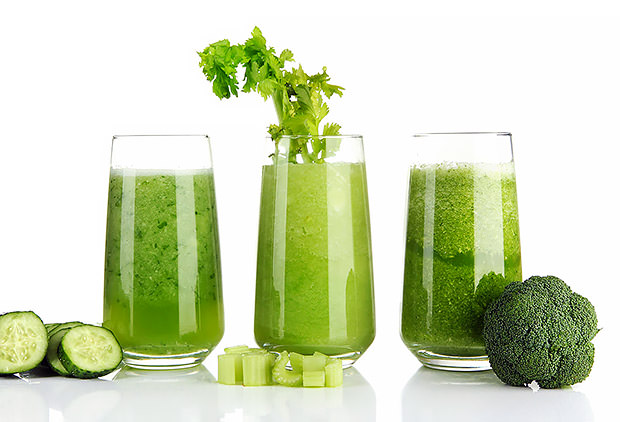
Green juice is made by juicing different green vegetables and often some fruits to create a slightly sweet drink that provides vitamins and minerals. While green juice is not an ideal quick-fix weight loss tool, it does have nutritional benefits. These tips will help you identify the pros and cons of incorporating juice into your healthy eating plan.
Consider juice as a vegetable serving, not a meal replacement.
Green juices provide an easy way to get more servings of vegetables, but they lack the total calories, protein, fiber, and healthy fat to be a balanced meal. Consider them a healthy addition to your eating plan instead of using them as a meal replacement. Add a small glass to your breakfast or use sweeter green juices as a dessert.
Don’t assume juice is a healthier option.
While juices can be beneficial, don’t assume they are the healthiest choice. According to the Mayo Clinic, there is no evidence that juices are healthier than eating whole fruits and vegetables, but most of the vitamins, minerals, and phytonutrients transfer to the juice.
Know that juice may leave you feeling hungry.
For the same reasons that green juice doesn’t make a good meal, it may also leave you feeling hungry. Without the fiber from the skin and pulp, juices don't keep you feeling full. Depending on the types of fruits and vegetables used, juices can also be high in sugar. While these are natural sugars, without the help of protein and fiber to keep blood sugar levels steady, blood sugar can spike and then drop, leaving you sluggish and hungry. Enjoy juice, but don’t expect it to tide you over until dinner.
Keep up the variety.
The main benefit of green juices is that they can include so many different vegetables. By incorporating more produce, you are supplying your body with more vitamins and minerals. Spinach, kale, cabbage, and mustard greens are just a few greens that can be juiced for your drink. Juices can also include herbs like mint, cilantro, or parsley. If you find the flavors a little too bitter, add a piece of fruit like a Granny Smith apple or an orange. The sweetness is usually enough to overcome any bitterness.
Use juice as an opportunity to try new foods.
Sometimes the issue you have with eating a new vegetable is not the flavor, but the texture. Juice helps remove these barriers. If there is a raw or cooked green that you dislike, try juicing it with other vegetables, herbs, and a piece of fruit. You may discover a new way of enjoying more foods and increasing the variety of nutrients you consume.


 3 Healthy Lunches for Your Work Week
 5 Tips for Stretching Your Budget for Healthy Food
 Best Ways to Reduce Added Sugar
 Healthy Tips to Lighten Up Picnic Foods
 Do You Need to Drink Milk?
 Tips to Keep Track of Water Intake
 Butter vs. Margarine: What’s the Best Choice?
 Healthy Eating Myths

 Pinterest
 RSS Feed