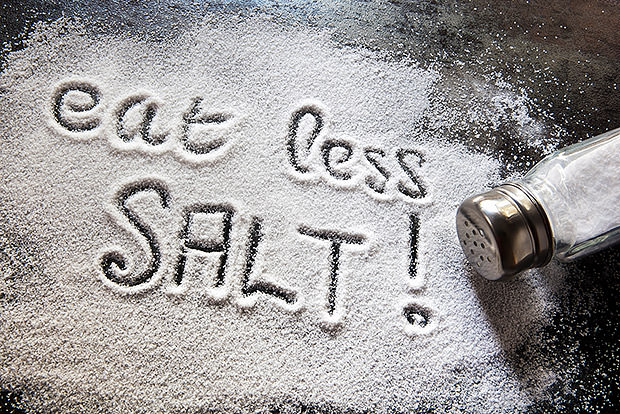
Taste first.
If you reach for the salt shaker the second your plate hits the table, set it down and start tasting your food first. Most foods already have plenty of salt added during cooking, and they taste delicious as-is. Break the habit and train yourself to taste your food before adding extra salt.
Use herbs and spices.
Go overboard on basil, cilantro, mint, cumin, and curry. The more herbs and spices you add to your food, the less salt you will need to bring out the flavors in the dish.
Cut a little at a time.
A love of salt grows over time, and loving it less takes time, too. Begin by reducing your salt intake by 1/8 teaspoon per day. Over the next week, cut it by another 1/8. Continue this process until you find a reduced level that still tastes good.
Cook more.
Packaged foods and restaurant meals are notorious for being loaded with sodium. You can greatly reduce your salt intake by cooking dinner from scratch two nights per week and by controlling the amount of packaged foods and sodium you use.
Take care when eating out.
When you do eat out, look for low-sodium options on the menu. Don’t assume that healthier options like salads and steamed vegetables are low in salt. Sauces, toppings, and dressings can make the sodium content skyrocket. Ask your server how the food is prepared and ask for the salt to be reduced.
Rinse it away.
When using canned foods, such as beans and vegetables, rinse and drain the contents before adding them to your recipes. Tests show that rinsing and draining canned beans can reduce sodium by up to 40%. Also, always select no-salt-added varieties whenever possible.
Go easy on instant foods.
Instant foods such as hot and cold cereals, bars, and boxed kits are already seasoned, often with high sodium content. Look for low-processed forms of cereals and other grains, and experiment with making your own bars and side dishes. You can add your own herbs and spices for flavor without so much salt.
Watch out for low, light, and reduced.
When packaged foods are made lower in calories, carbohydrates, or fat, companies have to find ways to boost flavor. Unfortunately, this is often done with additives that spike sodium content. Don't assume that terms like "low-calorie" or "low-fat" mean the food is a healthy choice.
Pick plain.
Order restaurant food like fish, steamed vegetables, and baked potatoes plain. Skip sauces and other toppings or ask for these on the side. You can then add an appropriate amount for flavor without excess salt.
Careful with condiments.
Often, the foods we eat don’t have much sodium, but the toppings we choose do. Ketchup, barbecue sauce, soy sauce, relishes, cheeses, sour cream, salad dressings, and salted nuts can be loaded with sodium. Cut back on how much you use or select low-sodium versions.
Additional Resources
To learn more about sodium and other nutrients, please visit our nutrient resources.


 3 Healthy Lunches for Your Work Week
 5 Tips for Stretching Your Budget for Healthy Food
 Best Ways to Reduce Added Sugar
 Healthy Tips to Lighten Up Picnic Foods
 Do You Need to Drink Milk?
 Tips to Keep Track of Water Intake
 Butter vs. Margarine: What’s the Best Choice?
 Healthy Eating Myths
 Pinterest
 RSS Feed